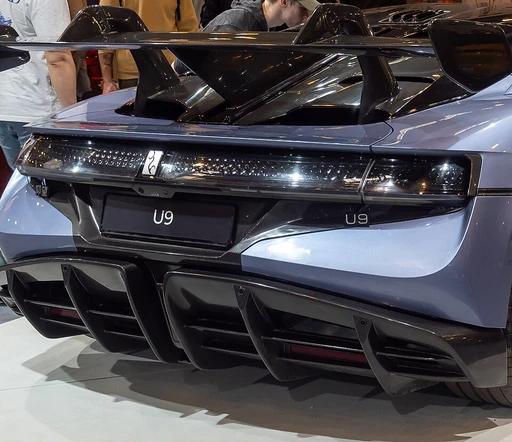
Who Owns BYD Auto?
BYD Auto is the passenger vehicle marque of BYD Company Limited, a publicly traded Chinese technology and automotive manufacturer headquartered in Shenzhen, Guangdong. Founded in 2003 when BYD acquired Qinchuan Automobile, the brand delivered 4.6 million vehicles in 2025 and overtook Tesla as the world's largest electric vehicle maker. BYD Company is listed on the Hong Kong Stock Exchange (1211) and Shenzhen Stock Exchange (002594).
Parent Company
Founded
2003
Status
Publicly Traded
Headquarters
BYD Auto Timeline
Who Owns BYD Auto?
- Parent Company: BYD Company Limited
- Ownership Type: Brand division
- Company Type: Publicly Traded
- Stock Ticker: Hong Kong Stock Exchange: 1211
| Brand | Parent Company | Ownership Type |
|---|---|---|
| BYD Auto | BYD Company Limited | Brand division |
Where to Buy
Disclosure: We may earn commission from purchases BYD Auto on Amazon
Advertisement
History of BYD Auto
- Founded: 2003
- Founders: Wang Chuanfu
BYD Company was founded in 1995 by Wang Chuanfu as a rechargeable battery manufacturer in Shenzhen. Within a decade it had become one of the world's largest producers of batteries for mobile phones, supplying Nokia, Motorola, and Samsung.
The automotive arm began in January 2003 when BYD acquired Xi'an Qinchuan Automobile, a small state-owned carmaker, for approximately 270 million yuan. The deal gave BYD a manufacturing license and an existing factory. Its first model, the F3 compact sedan launched in 2005, borrowed heavily from the Toyota Corolla's design and became one of China's best-selling cars on the strength of a sub-60,000 yuan price.
BYD moved into electrification early. It launched the F3DM, the world's first mass-produced plug-in hybrid, in 2008, the same year Warren Buffett's Berkshire Hathaway bought a 10 percent stake in the company for $230 million. The e6 electric taxi followed, deployed in Shenzhen's taxi fleet from 2010.
The brand's modern lineup took shape in the 2020s. The Han flagship sedan launched in 2020 as the first model with BYD's Blade Battery, a lithium iron phosphate pack designed to resist thermal runaway. The Dynasty series (Qin, Tang, Song, Yuan) and Ocean series (Dolphin, Seal, Seagull) gave the brand coverage from entry-level city cars to family SUVs. The Seagull, priced from about 70,000 yuan, became one of China's best-selling vehicles of any type.
Advertisement
International expansion accelerated after 2022. BYD entered Europe, Southeast Asia, Latin America, and Australia, building assembly plants in Thailand, Uzbekistan, Brazil, Hungary, Turkey, and Indonesia. In 2023 it passed Tesla in quarterly global battery EV sales for the first time. For the full year 2025, BYD delivered approximately 4.6 million vehicles, including 2.26 million pure battery electric vehicles, cementing its position as the world's largest maker of new energy vehicles. Overseas sales surged 151 percent in 2025 to about 1.05 million units.
About BYD Company Limited
What does BYD own?
BYD Company Limited owns BYD Auto, the world's largest new energy vehicle manufacturer, as well as BYD Electronics, a contract electronics manufacturer serving major smartphone brands. The company also controls FinDreams Battery, a lithium iron phosphate battery supplier to third-party automakers, BYD Semiconductor, a power electronics manufacturer, and BYD's commercial vehicle divisions producing electric buses and trucks. The Denza premium vehicle brand is wholly owned by BYD after the company took full control from Mercedes-Benz in 2024.
Is BYD publicly traded?
Yes, BYD Company Limited is listed on two stock exchanges. The company's H-shares trade on the Hong Kong Stock Exchange under ticker 1211, and its A-shares trade on the Shenzhen Stock Exchange under ticker 002594. BYD Electronics (International) Co., Ltd., a subsidiary handling mobile handset components, is separately listed on the Hong Kong Stock Exchange.
Who founded BYD?
BYD was founded by Wang Chuanfu and Lu Xiangyang on 10 February 1995 in Shenzhen, China. Wang Chuanfu, who was 29 years old at the time, had previously worked as a researcher at the Beijing Nonferrous Research Institute and identified an opportunity in rechargeable battery manufacturing as Japanese companies shifted to higher-value battery chemistries. Wang continues to serve as chairman and president of BYD as of 2026.
Advertisement
Where is BYD headquartered?
BYD is headquartered in Shenzhen, Guangdong Province, China. The company's main campus is located in the Pingshan District of Shenzhen, which houses its primary vehicle manufacturing, battery production, and research and development operations. BYD also operates manufacturing facilities across multiple Chinese provinces as well as in Thailand, Uzbekistan, Brazil, Hungary, Turkey, and Indonesia.
What is BYD's revenue?
BYD reported total revenues of CNY 803.9 billion ($116 billion) in FY2025, up 3.5% from FY2024. Net profit fell 19% to CNY 32.6 billion ($4.7 billion), the first annual profit decline since 2021. In Q1 2026, revenue declined 11.82% to CNY 150.2 billion and net profit fell 55.38% to CNY 4.08 billion, reflecting domestic market deterioration following the withdrawal of NEV subsidies.
How many vehicles did BYD sell in 2025?
BYD delivered 4,602,436 vehicles in FY2025, up 7.7% from the prior year. Of these, 2.26 million were pure electric vehicles, up 28%, and the remainder were plug-in hybrids. Overseas deliveries surged 151% to 1,046,083 units, while domestic sales declined almost 8% to 3,556,353 vehicles. BYD overtook Tesla as the world's largest pure EV maker in 2025.
Who owns BYD?
BYD Company Limited is a publicly listed company with no single controlling shareholder holding a majority stake. Wang Chuanfu, the founder and chairman, holds a significant personal stake in the company. Berkshire Hathaway, which had held approximately 6.9% of BYD as of June 2024, fully divested its position by September 2025 after a 17-year investment that generated a return of approximately 3,890%. The remaining shares are held by institutional investors and public shareholders.
Advertisement
Has BYD faced regulatory action in international markets?
Yes. In October 2024, the European Commission imposed additional tariffs of approximately 17.4% on BYD vehicles imported from China following an anti-subsidy investigation, on top of the existing 10% import duty. In the United States, the US Department of Defense stated in October 2025 that BYD merits inclusion on a list of companies linked to China's military. The National Defense Authorization Act for Fiscal Year 2024 prohibits the US Department of Defense from procuring BYD batteries on security grounds.
- Founded: 1995
- Headquarters: Shenzhen, Guangdong, China
- Company Type: Publicly Traded
- Stock: Hong Kong Stock Exchange: 1211
- Revenue: CNY 803.9 billion / $116 billion (FY2025)
- Employees: Approximately 900,000
Where Is BYD Auto Made / Based?
- Headquarters: Shenzhen, Guangdong, China
- Manufacturing / Operations: China, Thailand, Uzbekistan, Brazil, Hungary, Turkey, Indonesia
BYD Auto Categories & Tags
BYD Auto Recalls & Controversies
EU Anti-Subsidy Duties: In October 2024 the European Commission imposed countervailing duties of up to 35.3 percent on Chinese-made battery EVs, including a 17 percent rate on BYD, finding that Chinese manufacturers benefited from unfair state subsidies. BYD's European strategy has shifted toward local production in Hungary and Turkey in response.
Working Conditions Scrutiny: In late 2024 and 2025, Brazilian authorities investigated conditions at BYD's Bahia factory construction site after finding workers employed by a contractor in conditions officials described as analogous to slavery. BYD terminated the contractor relationship and relocated affected workers, and the factory proceeded toward production. The episode drew international scrutiny to the company's overseas construction practices.
Price War and Supplier Terms: BYD's aggressive price cuts in China contributed to a prolonged industry price war through 2024 and 2025, drawing regulatory attention. In 2025, Chinese regulators pushed automakers to shorten payment terms to suppliers; BYD and peers committed to 60-day payment cycles.
Advertisement
Recall History: BYD has issued periodic recalls in China through the state market regulator, including a 2024 recall covering certain Dolphin and Yuan Plus vehicles for a component defect. No large-scale safety crisis comparable to legacy automakers' major recalls is on record as of late 2026.
Brands Owned by BYD Company Limited

Advertisement
BYD Auto Ownership: Pros & Cons
Advantages
- +Vertical integration across batteries, semiconductors, and drivetrains gives the brand cost and supply advantages competitors cannot easily match
- +Public listing on two exchanges provides deep capital access for expansion
- +Scale of 4.6 million annual deliveries supports aggressive pricing power
- +Growing overseas manufacturing footprint reduces tariff exposure over time
- +In-house Blade Battery technology anchors a credible safety and cost story
Considerations
- -Dependent on the Chinese market for roughly three quarters of volume amid a destructive domestic price war
- -EU countervailing duties and US exclusion limit access to two of the world's three richest car markets
- -Net profit fell in FY2025 despite record revenue, showing margin pressure from price competition
- -Premium positioning remains unproven; the marque is associated with value, not luxury
Frequently Asked Questions About BYD Auto
Advertisement
Sources & Further Reading
Competitors to BYD Auto
These competing brands operate in the same categories and provide similar products or services. Compare key attributes to understand market positioning and competitive landscape.
| Brand | Parent Company | Country | Founded | Market Position | Primary Market | Gender Target |
|---|---|---|---|---|---|---|
| Changan Automobile | China | 1996 | Mass market | Asia pacific | All Genders | |
| Dongfeng Nissan | China | 2010 | Mass market | China | Unisex | |
| Sgmw | China | 1982 | Mass market | Asia pacific | All Genders | |
| Chery Automobile | China | 1997 | Mass market | Global | All Genders | |
| Geely | China | 1997 | Mass market | China | All-ages | |
| Great Wall Motors | China | 1984 | Mass market | Global | All Genders |
Learn More About Competitors
 Automotive
Changan
Owned by Chongqing Changan Automobile Co., Ltd.
Flagship marque of Chongqing Changan Automobile, a Chinese state-owned carmaker that sold 2.91 million vehicles in 2025. Listed on the Shenzhen Stock Exchange and now part of central SOE China Changan Automobile Group.
chinese-brandstate-ownedelectric-vehicles
 Automotive
Venucia
Owned by Dongfeng Nissan Passenger Vehicle Company
Chinese automotive brand launched in 2010 as a joint venture between Nissan and Dongfeng Motor Corporation. Focused on affordable vehicles and electric models for the Chinese market.
chinese-brandbudget-carsjoint-venture
 Automotive
Wuling
Owned by SAIC-GM-Wuling Automobile Co., Ltd.
Chinese budget vehicle marque of SAIC-GM-Wuling, best known for the Hongguang Mini EV, the country's best-selling micro electric car. Produced by the SAIC, General Motors, and Wuling joint venture in Liuzhou, Guangxi.
chinese-brandbudget-carselectric-vehicles
 Automotive
Chery
Owned by Chery Automobile Co., Ltd.
Flagship vehicle marque of Chery Automobile, covering the Tiggo SUV and Arrizo sedan lines, sold in more than 80 countries as China's top passenger vehicle export brand.
chinese-brandaffordable-carssuv
 Automotive
Geely Cars
Owned by Geely Automobile Holdings
Chinese passenger vehicle brand operated by Geely Automobile Holdings (HK: 0175), producing sedans, SUVs, and MPVs for domestic and international markets.
automobilespassenger-vehiclessedans
 Automotive
GWM
Owned by Great Wall Motor Company Limited
Chinese automotive brand specializing in SUVs and pickup trucks, owned by Great Wall Motors and sold in over 60 countries.
suvpickup-trucksautomobiles
Competitive Analysis
Market Positioning: BYD Auto competes with 6 brands in the same categories, ranging from mass market to luxury positioning.
Geographic Distribution: Competitors are headquartered across multiple regions, indicating global competition in this market segment.
Brand Heritage: Competitor brands range from established heritage brands to newer market entrants, with founding years spanning several decades.
Advertisement
Independent Alternatives to BYD Auto
Looking for brands with different ownership structures? These similar brands are not owned by BYD Company Limited, giving you alternative choices that support different corporate structures.
AutomotiveVenucia
Owned by Dongfeng Nissan Passenger Vehicle Company
Chinese automotive brand launched in 2010 as a joint venture between Nissan and Dongfeng Motor Corporation. Focused on affordable vehicles and electric models for the Chinese market.
chinese-brandbudget-carsjoint-venture
Privately Owned
Venucia is privately owned, unlike BYD Auto which is under a publicly traded parent company.
 Automotive
Fullway Tires
Owned by Qingdao Fullrun Tyre Corp., Ltd.
Performance oriented value tire brand of Qingdao Fullrun Tyre, covering passenger, SUV, and large diameter UHP fitments sold through US online retailers and mass channels.
tiresbudget-tiresuhp
Privately Owned
Fullway Tires is privately owned, unlike BYD Auto which is under a publicly traded parent company.
 Automotive
RoadOne Tires
Owned by Tongli Tyre Co., Ltd.
Commercial truck tire brand of Tongli Tyre under Hixih Rubber Industry Group, sold globally through a value tier TBR range with North American distribution.
tirestruck-tirescommercial-tires
Privately Owned
RoadOne Tires is privately owned, unlike BYD Auto which is under a publicly traded parent company.
 Automotive
Arroyo Tires
Owned by Wholesale Tire Distributors
Value tire brand owned by Wholesale Tire Distributors, covering passenger, SUV, light truck, run-flat, and EV fitments across more than 300 SKUs for the US market.
tiresbudget-tirespassenger-tires
Privately Owned
Arroyo Tires is privately owned, unlike BYD Auto which is under a publicly traded parent company.
 Automotive
Atturo
Owned by Atturo Tire Corp.
Private tire brand founded in 2009 specializing in affordable SUV, light truck, and off-road tires, headquartered in Wadsworth, Illinois.
tiresbudget-tiressuv-tires
Privately Owned
Atturo is privately owned, unlike BYD Auto which is under a publicly traded parent company.
 Automotive
Bumper.com
Owned by The Lifetime Value Co.
Vehicle history report service owned by The Lifetime Value Co., offering NMVTIS-approved reports on more than 300 million vehicles.
vehicle-history-reportsvin-lookupautomotive-data
Privately Owned
Bumper.com is privately owned, unlike BYD Auto which is under a publicly traded parent company.
BYD Company Limited Stock Information
Advertisement
Jobs at BYD Company Limited
Latest News About BYD Auto
Advertisement
Related Articles About BYD Auto
View more articles
Home And Property
Mobile Network Brand Ownership: MVNOs and Their Parents
Only 3 real networks exist in the US. T-Mobile owns Mint and Metro, Verizon owns Straight Talk and Visible, AT&T owns Cricket. Boost just survived the EchoStar collapse. Every MVNO has a parent. Explore our database.
Who Brands StaffNov 21, 2026
T MobileVerizonAt And T

Home And Property
Internet Provider Brand Ownership: Who Really Runs Your Connection
Charter just passed Comcast as America's largest cable ISP after closing its $34.5B Cox deal (34.3M subscribers). AT&T leads fiber, Verizon absorbed Frontier, T-Mobile is the 5G disruptor. Explore our database.
Who Brands StaffNov 19, 2026
ComcastXfinityAt And T

Home And Property
Home Insurance Brand Ownership: The Companies Behind the Policies
State Farm writes 18.7% of US homeowners premiums ($35.3B). Allstate is #2 (9.4%), USAA #3 (7.0%). Liberty Mutual is retiring the Safeco name in 2026. Who owns your home insurance? Explore our database.
Who Brands StaffNov 18, 2026
State FarmAllstateUsaa
People Also Searched
Discover popular brands and companies in the Automotive category and related searches from other users.

Brandperformance-parts
86 Speed
Online retailer of Toyota 86, Subaru BRZ and Scion FR-S performance parts, operated by Speed Industry, Inc. of Las Vegas, Nevada.
Brand in Automotive
toyota-86subaru-brz

Brandperformance-cars
Abarth
Iconic Italian high-performance automotive brand specializing in sporty variants of Fiat vehicles, known for its racing heritage, distinctive scorpion logo, and recent expansion into electrified performance models.
Brand in Automotive
italian-brandsporty-vehicles

Brandzero-emissions
Accelera
Zero-emissions technology brand of Cummins Inc., covering battery-electric powertrains, fuel cells, and electrolyzers under the Destination Zero strategy.
Brand in Automotive
electric-powertrainfuel-cell