
Who Owns Benefiber?
Benefiber is a fiber supplement brand owned by Haleon plc (LSE/NYSE: HLN), the consumer healthcare company formed in July 2022 when GSK's consumer health division was demerged. Benefiber, a wheat dextrin prebiotic fiber, reached Haleon through the 2015 Novartis-GSK consumer joint venture and the 2022 demerger. It is sold in powder, on-the-go stick pack, and gummy formats across the United States and other markets.
Parent Company
Acquired
2022
Status
Publicly Traded
Headquarters
Benefiber Timeline
Who Owns Benefiber?
- Parent Company: Haleon plc
- Ownership Type: Wholly owned
- Acquisition Year: 2022
- Company Type: Publicly Traded
- Stock Ticker: LSE: HLN
| Brand | Parent Company | Ownership Type |
|---|---|---|
| Benefiber | Haleon plc | Wholly owned |
Where to Buy
Disclosure: We may earn commission from purchases Benefiber on Amazon
Advertisement
History of Benefiber
- Founded: 2001
- Founders: Novartis (internal development)
- Acquired by Haleon plc: 2022
Benefiber launched in the United States in 2001 under Novartis's consumer health business, entering a fiber supplement market dominated by psyllium products led by Metamucil. Its differentiation was a clear, taste-free powder built on wheat dextrin, marketed as grit-free and easy to mix into drinks and food.
Through the 2000s, Benefiber expanded its US presence through mass retail distribution and a positioning around invisible fiber: a supplement that dissolved completely without changing the taste or texture of what it was added to. The brand added flavored variants and portable stick packs as the category grew.
The 2015 Novartis-GSK transaction moved Benefiber into the new consumer healthcare joint venture, where it joined a portfolio anchored by brands including Theraflu, Excedrin, and later Centrum and Advil when Pfizer's consumer business joined in 2019.
Under the joint venture and then Haleon, Benefiber expanded formats to include gummies and functional variants combining prebiotic fiber with superfruit and supergreens blends. The brand's NSF certifications confirm production at US facilities including Santa Cruz, California, and Plymouth, Minnesota.
Advertisement
Since the 2022 demerger, Haleon has positioned Benefiber within its digestive health and supplements portfolio, marketing it alongside its OTC digestive brands and expanding its presence in the growing GLP-1 era digestive support market.
About Haleon plc
What does Haleon own?
Haleon owns a portfolio of approximately 24 global and regional consumer health brands across five categories: oral health, vitamins and supplements, pain relief, respiratory health, and digestive health. Key brands include Sensodyne, Panadol, Centrum, Advil, Voltaren, Otrivin, Parodontax, Polident and Poligrip, Aquafresh, and Emergen-C. Products are sold in more than 170 countries.
Is Haleon publicly traded?
Yes. Haleon plc is listed on the London Stock Exchange under ticker HLN, with American Depositary Shares also listed on the New York Stock Exchange under the same ticker. Haleon completed its listing on the London Stock Exchange on July 18, 2022, in what was the largest London Stock Exchange listing in over a decade. The company does not have a controlling shareholder.
Who founded Haleon?
Haleon was formed through the demerger of GSK's consumer healthcare division in July 2022 and does not have a traditional founder. The consumer healthcare business that became Haleon was assembled by GSK and Pfizer through decades of acquisitions. In 2019, GSK and Pfizer combined their consumer healthcare businesses into a joint venture, which was subsequently demerged as Haleon in 2022. Brian McNamara became CEO at the time of the demerger.
Advertisement
Where is Haleon headquartered?
Haleon is headquartered in Weybridge, Surrey, United Kingdom. The company's registered office and principal executive offices are located in Weybridge. Haleon operates manufacturing facilities in the United Kingdom, the United States, India, Germany, Ireland, and China. The company sells products in more than 170 countries.
How many brands does Haleon own?
Haleon owns approximately 24 global and regional consumer health brands. The portfolio is concentrated in five categories: oral health (Sensodyne, Parodontax, Polident, Poligrip, Aquafresh), vitamins and supplements (Centrum, Caltrate, Emergen-C), pain relief (Advil, Panadol, Voltaren), respiratory health (Otrivin, Theraflu, Robitussin), and digestive health (Nexium Control, Tums).
Who owns Haleon?
Haleon plc is a publicly traded company with no controlling shareholder. At the time of the July 2022 demerger, GSK plc and Pfizer Inc. each retained significant stakes in Haleon. Both companies have been reducing their positions through secondary share placements. As of early 2026, both GSK and Pfizer have substantially reduced their stakes, each holding less than 10% of shares. The remaining shares are held by institutional investors and public shareholders.
What is Haleon's revenue?
Haleon reported FY2025 net revenue of approximately GBP 10.2 billion, with organic revenue growth of approximately 4%. The oral health category is the largest and fastest-growing segment, driven by Sensodyne. The company employs approximately 24,000 people and sells products in more than 170 countries.
Advertisement
- Founded: 2022
- Headquarters: Weybridge, Surrey, United Kingdom
- Company Type: Publicly Traded
- Stock: LSE: HLN
- Revenue: Approximately GBP 10.2 billion (FY2025)
- Employees: Approximately 24,000
Where Is Benefiber Made / Based?
- Headquarters: Weybridge, Surrey, United Kingdom
- Manufacturing / Operations: United States
Benefiber Categories & Tags
Benefiber Recalls & Controversies
Benefiber's most notable controversy involved advertising claims in the early 2000s, when Novartis's marketing of the product as natural and its wheat dextrin ingredient drew scrutiny over whether the product was as natural as promoted. No major regulatory penalty resulted.
Like all fiber supplements, the brand carries FDA-required warnings about choking risk if taken without adequate liquid, standard for bulk-forming fiber products. No major product safety recalls specific to Benefiber were on record as of November 2026.
The brand operates under FDA dietary supplement regulations, with NSF certification for several products providing third-party verification of contents and manufacturing standards.
Advertisement
Brands Owned by Haleon plc
 Healthcare Pharmaceuticals
Citrucel
Owned by Haleon plc
Methylcellulose fiber supplement marketed as a no-gas alternative to psyllium, owned by Haleon following the 2022 demerger of GSK's consumer health business.
fiber-supplementdigestive-healthmethylcellulose
 Healthcare Pharmaceuticals
Lamisil
Owned by Haleon plc
Over-the-counter antifungal medication for treating fungal infections including athlete's foot and toenail fungus, owned by Haleon plc.
antifungalfungal-infectionover-the-counter
 Healthcare Pharmaceuticals
Otrivin
Owned by Haleon plc
Over-the-counter nasal decongestant spray for relieving nasal congestion from colds and allergies, owned by Haleon plc.
nasal-decongestantcold-reliefover-the-counter
 Healthcare Pharmaceuticals
Panadol
Owned by Haleon plc
Brand of pain relief medication containing paracetamol (acetaminophen) used for treating mild to moderate pain and fever, manufactured and marketed globally by Haleon.
pain-reliefmedicationparacetamol
 Beauty Personal Care
Sensodyne
Owned by Haleon plc
The world's leading toothpaste brand for sensitive teeth, owned by Haleon plc. Formulated with stannous fluoride and potassium nitrate to relieve tooth sensitivity. Sold in over 130 countries. Launched in 1961 by Block Drug Company.
toothpasteoral-caresensitive-teeth
Benefiber Ownership: Pros & Cons
Advantages
- +Haleon's scale provides strong retail distribution and marketing resources
- +Parent's digestive health portfolio creates cross-brand category presence
- +NSF certification provides third-party quality verification
- +Gummy and stick pack formats keep the brand current with supplement trends
- +GLP-1 digestive support positioning aligns with a growing consumer need
Considerations
- -Competes within the same portfolio as stablemate Citrucel for fiber share
- -Wheat dextrin supplies less viscous fiber than psyllium, limiting some benefits
- -Generic fiber powders undercut branded pricing
- -Private-label competition is heavy in the fiber supplement aisle
- -Dependent on Haleon's marketing priorities among a large brand portfolio
Advertisement
Frequently Asked Questions About Benefiber
Sources & Further Reading
Advertisement
Competitors to Benefiber
These competing brands operate in the same categories and provide similar products or services. Compare key attributes to understand market positioning and competitive landscape.
| Brand | Parent Company | Country | Founded | Market Position | Primary Market | Gender Target |
|---|---|---|---|---|---|---|
| Haleon | United Kingdom | 1982 | Mass market | United states | All Genders | |
| Prestige Consumer Healthcare | USA | 1987 | Mass market | United states | All Genders | |
| Konsyl Pharmaceuticals | USA | 1934 | Mass market | United states | All Genders | |
| Procter Gamble | United States | 1934 | Mass market | United states | All Genders |
Learn More About Competitors
Healthcare PharmaceuticalsCitrucel
Owned by Haleon plc
Methylcellulose fiber supplement marketed as a no-gas alternative to psyllium, owned by Haleon following the 2022 demerger of GSK's consumer health business.
fiber-supplementdigestive-healthmethylcellulose
 Healthcare Pharmaceuticals
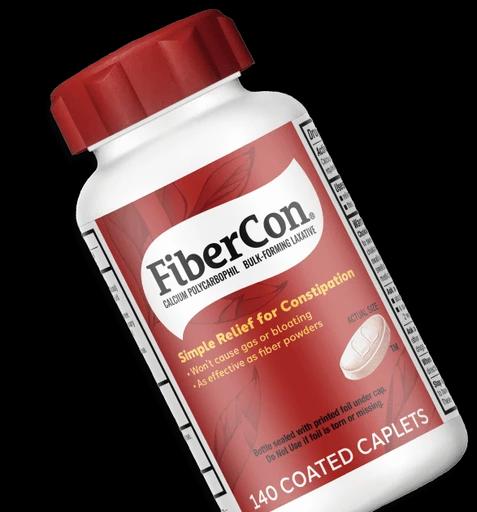
FiberCon
Owned by Prestige Consumer Healthcare Inc.
Calcium polycarbophil bulk-forming laxative brand marketed in caplet form, distributed by Medtech Products Inc., a Prestige Consumer Healthcare company, per 2026 FDA labeling.
fiber-supplementdigestive-healthcalcium-polycarbophil
 Healthcare Pharmaceuticals
Konsyl
Owned by Konsyl Pharmaceuticals Inc.
Psyllium fiber supplement brand produced by Konsyl Pharmaceuticals, a privately held Maryland company marketing the same psyllium active ingredient as Metamucil since 1934.
fiber-supplementdigestive-healthpsyllium
 Healthcare Pharmaceuticals
Metamucil
Owned by Procter & Gamble Company
American psyllium-based fiber supplement brand for digestive health, heart health, and blood sugar management, owned by Procter & Gamble.
fiber-supplementdigestive-healthpsyllium
Competitive Analysis
Market Positioning: Benefiber competes with 4 brands in the same categories, ranging from mass market to luxury positioning.
Geographic Distribution: Competitors are headquartered across multiple regions, indicating global competition in this market segment.
Brand Heritage: Competitor brands range from established heritage brands to newer market entrants, with founding years spanning several decades.
Advertisement
Independent Alternatives to Benefiber
Looking for brands with different ownership structures? These similar brands are not owned by Haleon plc, giving you alternative choices that support different corporate structures.
Healthcare PharmaceuticalsKonsyl
Owned by Konsyl Pharmaceuticals Inc.
Psyllium fiber supplement brand produced by Konsyl Pharmaceuticals, a privately held Maryland company marketing the same psyllium active ingredient as Metamucil since 1934.
fiber-supplementdigestive-healthpsyllium
Privately Owned
Konsyl is privately owned, unlike Benefiber which is under a publicly traded parent company.
 Healthcare Pharmaceuticals
Band-Aid
Owned by Kenvue
American adhesive bandage brand invented in 1921, owned by Kenvue Inc. Band-Aid is the leading adhesive bandage brand in the United States and is sold in more than 100 countries.
wound-careadhesive-bandagefirst-aid
Privately Owned
Band-Aid is privately owned, unlike Benefiber which is under a publicly traded parent company.
 Healthcare Pharmaceuticals
Boots
Owned by Walgreens Boots Alliance
Boots is the UK's leading pharmacy-led health and beauty retailer, founded in 1849, now operating as The Boots Group under Sycamore Partners since August 2025.
pharmacyhealth-beautyuk-retail
Privately Owned
Boots is privately owned, unlike Benefiber which is under a publicly traded parent company.
 Healthcare Pharmaceuticals
Duane Reade
Owned by Walgreens Boots Alliance
Duane Reade is a New York City drugstore chain owned by Walgreen Co. under Sycamore Partners, operating approximately 90 stores across the five boroughs.
pharmacydrugstorenew-york
Privately Owned
Duane Reade is privately owned, unlike Benefiber which is under a publicly traded parent company.
 Healthcare Pharmaceuticals
Motrin
Owned by Kenvue
American brand of ibuprofen pain relief medication owned by Kenvue, the consumer health spinoff from Johnson & Johnson, which is being acquired by Kimberly-Clark in a $40 billion deal announced in November 2025.
pain-reliefibuprofenanti-inflammatory
Privately Owned
Motrin is privately owned, unlike Benefiber which is under a publicly traded parent company.
 Healthcare Pharmaceuticals
Neosporin
Owned by Kenvue
American brand of over-the-counter first aid antibiotic ointment containing bacitracin, neomycin, and polymyxin B. Owned by Kenvue (NYSE: KVUE) since the August 2023 spin-off from Johnson & Johnson.
antibiotic-ointmentwound-caretopical
Privately Owned
Neosporin is privately owned, unlike Benefiber which is under a publicly traded parent company.
Haleon plc Stock Information
Advertisement
Jobs at Haleon plc
Latest News About Benefiber
Advertisement
Related Articles About Benefiber
View more articles
Health
Dental Brand Ownership Beyond Colgate and Crest
Colgate holds 41.3% global toothpaste share. P&G (Crest, Oral-B) has 14.1%. Haleon (Sensodyne) has 4.4%. Church & Dwight is the only independent at scale. The oral care market is $47.2B. Explore our database.
Who Brands StaffNov 12, 2026
ColgateCrestOral B

Health
Supplement Brand Ownership: Who Makes Your Vitamins
Garden of Life is Nestle. Centrum is Haleon. One A Day is Bayer. Nature's Bounty is heading to private equity firm Yellow Wood in a $1B deal. Discover who makes your vitamins.
Who Brands StaffNov 2, 2026
VitaminsSupplementsNestle

Health
Who Makes Over the Counter Painkillers: Tylenol to Nurofen
Tylenol is Kenvue, days from becoming Kimberly-Clark in a ~$49B deal. Advil is Haleon (GSK spin-off). Aleve is Bayer. Nurofen is Reckitt. Discover who makes your painkillers.
Who Brands StaffNov 1, 2026
TylenolAdvilNurofen
People Also Searched
Discover popular brands and companies in the Healthcare & Pharmaceuticals category and related searches from other users.

Brandpharmaceutical
Abbokinase
Abbokinase (urokinase) is a thrombolytic medication historically used for pulmonary embolism and catheter clearance. Originally marketed by Abbott Laboratories, now owned by Microbix Biosystems as Kinlytic. FDA-approved since 1978.
Brand in Healthcare & Pharmaceuticals
thrombolyticurokinase

Brandmedical-devices
Abbott Medical Devices
Abbott Laboratories' medical device business spanning cardiovascular, diabetes care (FreeStyle Libre), neuromodulation, and structural heart, generating roughly $20 billion annually.
Brand in Healthcare & Pharmaceuticals
cardiovasculardiabetes-care

Brandrsv-vaccine
Abrysvo
Pfizer's respiratory syncytial virus (RSV) vaccine approved for older adults, maternal immunization to protect infants, and younger at-risk adults. Launched 2023.
Brand in Healthcare & Pharmaceuticals
vaccinesmaternal-immunization