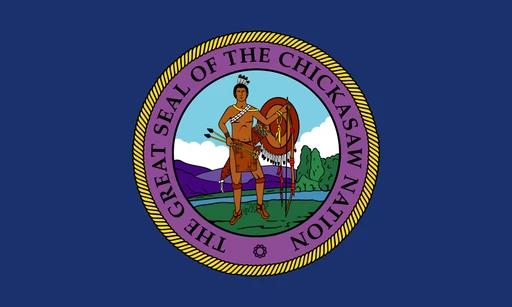
The Chickasaw Nation
Federally recognized tribal nation headquartered in Ada, Oklahoma, operating more than 100 businesses including WinStar World Casino, the world's largest casino.
Company Type
state-owned
Founded
1855
Headquarters
Ada, Oklahoma, United States
Revenue
$3.7B government revenues (FY2025)
Employees
~15,000
Primary Market
United States
The Chickasaw Nation Timeline
About The Chickasaw Nation
What does the Chickasaw Nation own?
The nation operates more than 100 businesses including WinStar World Casino and Resort, Riverwind Casino, OKANA Resort, West Bay Resort, Bedré Fine Chocolate, Chickasaw Nation Industries, and Chickasaw Community Bank.
Is the Chickasaw Nation a company?
No. It is a federally recognized tribal government whose enterprises function as state-owned businesses. Profits fund nearly 400 government programs for Chickasaw citizens.
Who leads the Chickasaw Nation?
Bill Anoatubby has served as governor since 1987, leading an elected executive branch alongside a tribal legislature and judiciary.
Where is the Chickasaw Nation headquartered?
The nation's headquarters is in Ada, Oklahoma, in the south-central part of the state within the tribe's historic treaty territory.
How many people work for the Chickasaw Nation?
Approximately 15,000 employees work across the government and its more than 100 businesses, making it one of the largest employers in Oklahoma.
What is the Chickasaw Nation's revenue?
Government revenues totaled approximately $3.7 billion in fiscal year 2025, with net assets exceeding $7.5 billion and a reported $8.2 billion national economic impact.
History of The Chickasaw Nation
The Chickasaw people's homeland lay in what is now northern Mississippi, Alabama, and Tennessee, where they were known historically as skilled traders and formidable defenders of their territory. Under the Indian Removal Act of 1830, the tribe negotiated the Treaty of Pontotoc Creek in 1832 and removed westward to Indian Territory through the 1830s and 1840s, one of the so-called Trail of Tears migrations.
In 1855 the Chickasaw separated from the Choctaw Nation, with whom they had been administratively merged after removal, and organized their own government with a constitution in 1856. The nation rebuilt in what became south-central Oklahoma, establishing Ada as its eventual capital.
Federal policy dissolved tribal governments during the allotment and assimilation era around the turn of the twentieth century, but the Chickasaw maintained community and identity. The modern governmental structure was reconstituted through the twentieth century, culminating in a new constitution adopted in 1983 and federal reaffirmation of tribal self-governance.
Bill Anoatubby became governor in 1987, beginning a tenure that transformed the nation's economic base. At that point the nation had roughly 250 employees and less than $500,000 in a federal trust fund. Anoatubby's strategy centered on business development, starting with gaming operations after the Indian Gaming Regulatory Act of 1988 created the legal framework for tribal casinos.
WinStar Casinos opened in Thackerville in 2004 on the Texas border and expanded into WinStar World Casino, becoming the world's largest casino by gaming floor after the 2013 expansion. Diversification followed into hospitality, manufacturing, media, energy, banking, and federal contracting through Chickasaw Nation Industries, founded in 1996.
Recent milestones include the opening of OKANA Resort and Indoor Water Park in Oklahoma City (its indoor water park drew more than half a million guests in its first year through 2025), the West Bay Resort at Kingston, and continued expansion at WinStar including the Lucas Oil Live entertainment venue. Fiscal year 2025 brought approximately $3.7 billion in government revenues and pushed net assets past $7.5 billion.
Brands Owned by The Chickasaw Nation
The Chickasaw Nation owns 1 brand in our database. Explore the ownership tree below — click categories to expand and see individual brands.
The Chickasaw Nation
state owned · Founded 1855 · Ada, Oklahoma, United States
1
brands
The Chickasaw Nation Ownership: Pros & Cons
Advantages
- +Sovereign ownership structure aligned with multi-generational planning horizons
- +WinStar's unique border position serving the Texas market
- +Diversified portfolio across gaming, contracting, banking, manufacturing, and hospitality
- +$7.5 billion net asset base and $3.7 billion annual government revenues
- +15,000-employee operational scale with stable leadership since 1987
Considerations
- -Heavy revenue concentration in Oklahoma tribal gaming
- -Texas casino legalization, if enacted, would compress WinStar's geographic advantage
- -Tribal enterprise financials lack the disclosure transparency of public companies
- -Compact and federal regulatory dependence for gaming operations
- -Diversification into new markets carries execution risk outside the core region
Frequently Asked Questions About The Chickasaw Nation
What does the Chickasaw Nation own?
The nation operates more than 100 businesses including WinStar World Casino and Resort, Riverwind Casino, OKANA Resort, West Bay Resort, Bedré Fine Chocolate, Chickasaw Nation Industries, and Chickasaw Community Bank.
Is the Chickasaw Nation a company?
No. It is a federally recognized tribal government whose enterprises function as state-owned businesses. Profits fund nearly 400 government programs for Chickasaw citizens.
Who leads the Chickasaw Nation?
Bill Anoatubby has served as governor since 1987, leading an elected executive branch alongside a tribal legislature and judiciary.
Where is the Chickasaw Nation headquartered?
The nation's headquarters is in Ada, Oklahoma, in the south-central part of the state within the tribe's historic treaty territory.
How many people work for the Chickasaw Nation?
Approximately 15,000 employees work across the government and its more than 100 businesses, making it one of the largest employers in Oklahoma.
What is the Chickasaw Nation's revenue?
Government revenues totaled approximately $3.7 billion in fiscal year 2025, with net assets exceeding $7.5 billion and a reported $8.2 billion national economic impact.
Sources & Further Reading
Jobs at The Chickasaw Nation
Latest News About The Chickasaw Nation
Related Articles About The Chickasaw Nation
View more articles
Home Insurance Brand Ownership: The Companies Behind the Policies
State Farm writes 18.7% of US homeowners premiums ($35.3B). Allstate is #2 (9.4%), USAA #3 (7.0%). Liberty Mutual is retiring the Safeco name in 2026. Who owns your home insurance? Explore our database.

Skincare Ingredient Brands: Who Makes What Your Favourite Uses
BASF makes your surfactants and UV filters. Croda's Sederma makes your peptides (Matrixyl, Argireline). Givaudan makes your botanicals. Lubrizol makes your polymers. Discover the hidden layer. Explore our database.

Medical Device Brand Ownership: Medtronic to Stryker
Medtronic is #1 ($36.4B, 95K employees, 150 countries). J&J MedTech is #2 ($33.8B). Stryker grew 11.1%. Boston Scientific hit $20.1B. The medtech market is $666B. Discover medical device ownership. Explore our database.
Related Companies to The Chickasaw Nation
View more companies
Yelp Inc.
San Francisco local-business reviews platform that also operates Yelp Guest Manager, a reservations and waitlist suite for restaurants.
1 brand in portfolio

JetBlue Airways
American low-cost carrier operating scheduled passenger services to over 100 destinations from focus cities at New York JFK, Boston, Fort Lauderdale, and other cities, known for its Mint premium cabin and JetForward transformation strategy.
5 brands in portfolio
Loews Corporation
Tisch family-controlled conglomerate headquartered in New York City, owning CNA Financial insurance, Boardwalk Pipelines, and Loews Hotels.
2 brands in portfolio

Fortune Brands Innovations, Inc.
Public American home, security, and digital products company that owns Moen, Master Lock, Therma-Tru, and SentrySafe, listed on the NYSE.
1 brand in portfolio

Internet Brands
Privately held American digital media and software company headquartered in El Segundo, California. Owned by KKR, Warburg Pincus, and Temasek; operates WebMD, Medscape, FindLaw, Nolo, and CarsDirect.
1 brand in portfolio

Morgan & Morgan, P.A.
Morgan & Morgan is America's largest personal injury law firm, a private partnership founded in 1988 generating more than $2 billion in annual revenue.
1 brand in portfolio