Who Owns Vueling?
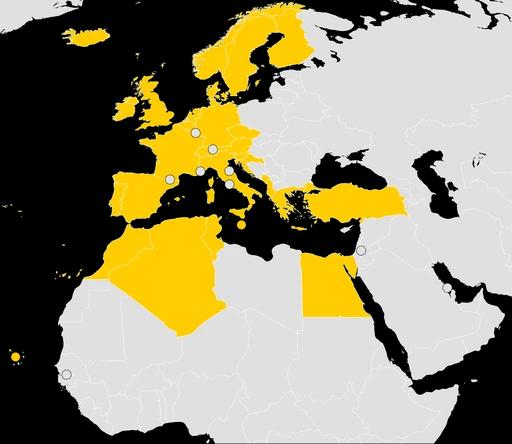
Vueling is a Spanish low-cost airline wholly owned by International Airlines Group (IAG), the Anglo-Spanish holding company that also owns British Airways, Iberia, Aer Lingus, and LEVEL. Founded in 2004 and headquartered at Barcelona El Prat Airport, Vueling carried 38.2 million passengers in 2025 on an Airbus A320 family fleet of about 139 aircraft, generating approximately EUR 3.2 billion in revenue.
Parent Company
Acquired
2013
Status
Publicly Traded
Headquarters
Vueling Timeline
Who Owns Vueling?
- Parent Company: International Airlines Group (IAG)
- Ownership Type: Wholly owned
- Acquisition Year: 2013
- Company Type: Publicly Traded
- Stock Ticker: LSE / BME: IAG
| Brand | Parent Company | Ownership Type |
|---|---|---|
| Vueling | International Airlines Group (IAG) | Wholly owned |
Advertisement
History of Vueling
- Founded: 2004
- Founders: Carlos Munoz, Lazaro Ros
- Acquired by International Airlines Group (IAG): 2013
Vueling began operations in 2004, founded by Carlos Munoz and Lazaro Ros with backing from investors including the Apax Partners fund. It launched with two Airbus A320s flying between Barcelona and Ibiza, positioning itself as Spain's first genuine low-cost carrier modeled on Southwest Airlines and Ryanair. The name combines 'vuelo,' Spanish for flight, with the English gerund ending to signal a modern, international attitude.
Growth was rapid. By 2007 the airline was profitable and listed on the Madrid stock exchange in an IPO, one of Europe's few publicly traded low-cost carriers. But mounting losses in 2008 and 2009 drove it into a merger with Clickair, Iberia's own low-cost venture based at the same Barcelona airport. The 2009 combination, in which Vueling absorbed Clickair, gave Iberia a substantial stake and created a far stronger Barcelona-based low-cost operator.
The 2011 creation of IAG brought Vueling under the Anglo-Spanish umbrella, and IAG's 2013 tender offer completed the buyout at roughly EUR 123 million for the remaining shares, delisting the airline. Under IAG, Vueling expanded beyond Spain, opening bases at Rome Fiumicino, Paris Orly, Amsterdam, and other European cities, and becoming the largest carrier at Barcelona El Prat.
The airline has periodically weighed brand changes, including a floated idea to fold it into the LEVEL long-haul brand, but retained its name as the group's European low-cost workhorse. The COVID-19 pandemic hit hard, and IAG injected EUR 110 million of support into Vueling in 2021, which the airline repaid from profits in 2025.
Advertisement
The defining recent development is a fleet and growth reset. In 2025 Vueling unveiled a strategy targeting 60 million passengers by 2035, roughly 50 percent above current levels, backed by a fleet switch from Airbus to Boeing. IAG assigned Vueling its order for 50 Boeing 737 MAX aircraft, 25 of the 737-8-200 and 25 of the 737-10, with deliveries beginning from late 2026 and about EUR 5 billion of investment through 2030. In 2025 the airline carried 38.2 million passengers, earned EUR 393 million in operating profit on approximately EUR 3.2 billion of revenue, and posted net profit of EUR 234.5 million.
About International Airlines Group (IAG)
What does IAG own?
IAG owns five airline brands: British Airways (UK flag carrier), Iberia (Spanish flag carrier), Aer Lingus (Irish flag carrier), Vueling (low-cost carrier based in Barcelona), and LEVEL (long-haul low-cost). The group also operates IAG Cargo (freight business), IAG Loyalty (Avios loyalty program), and IAG Engineering (maintenance services). IAG has a pending agreement to acquire Air Europa, subject to regulatory approval.
Is IAG publicly traded?
Yes. International Airlines Group is listed on the London Stock Exchange (LSE: IAG) and the Spanish stock exchanges (BME: IAG). The company has a standard single-class share structure with one vote per share. Qatar Airways is the largest single shareholder with approximately 25.1% of shares. Other major holders include BlackRock and Vanguard.
Who founded IAG?
IAG was founded in January 2011 through the merger of British Airways and Iberia. The merger was structured as a share-for-share exchange, with British Airways shareholders holding approximately 55% of the new company and Iberia shareholders approximately 45%. Willie Walsh, then CEO of British Airways, became IAG's first CEO and architected the group's subsequent acquisition strategy.
Advertisement
Where is IAG headquartered?
IAG is legally registered in Madrid, Spain, as International Consolidated Airlines Group, S.A. Its corporate head office is in London, United Kingdom. This dual Anglo-Spanish structure reflects the 2011 merger of British Airways and Iberia. The group's airline brands operate from their respective hubs: British Airways at London Heathrow, Iberia at Madrid Barajas, Aer Lingus at Dublin, and Vueling at Barcelona.
How many brands does IAG own?
IAG owns 5 airline brands: British Airways, Iberia, Aer Lingus, Vueling, and LEVEL. The group also operates IAG Cargo, IAG Loyalty (Avios), and IAG Engineering as non-airline brands. The pending Air Europa acquisition would add a sixth airline brand if approved by regulators.
Who owns IAG?
IAG is publicly traded with no controlling shareholder. Qatar Airways is the largest single shareholder with approximately 25.1% of shares, though it has stated its investment is purely financial and does not seek control. Other major institutional holders include BlackRock, Vanguard, and various European investment funds. The company has a standard single-class share structure with one vote per share.
What is IAG's revenue?
IAG reported FY2024 revenue of EUR 29.5 billion with operating profit of EUR 4.4 billion, the group's strongest post-pandemic financial performance. Passenger revenue accounts for the majority of total revenue, driven by transatlantic demand and premium cabin sales. IAG Loyalty generates significant high-margin revenue through the sale of Avios points to credit card and commercial partners.
Advertisement
Is IAG involved in any legal proceedings?
IAG faces ongoing regulatory review of its proposed Air Europa acquisition by the European Commission, which has raised competition concerns on Spanish domestic and Latin American routes. British Airways has faced consumer protection enforcement by the UK Civil Aviation Authority related to cancellations and passenger compensation. The group's airlines are subject to ongoing environmental regulation compliance under the EU ETS and UK ETS.
- Founded: 2011
- Headquarters: London, United Kingdom
- Company Type: Publicly Traded
- Stock: LSE / BME: IAG
- Revenue: EUR 29.5 billion (FY2024)
- Employees: Approximately 65,000
Where Is Vueling Made / Based?
- Headquarters: El Prat de Llobregat, Catalonia, Spain
Vueling Categories & Tags
Vueling Recalls & Controversies
Vueling has faced recurring scrutiny over operational reliability. Spanish consumer authorities and media have covered waves of cancellations and delays during peak summers, including a 2016 disruption episode that drew a government investigation into its scheduling practices. Regulators fined the airline over customer compensation handling in that period, and the company restructured its schedule planning afterward.
The airline has also attracted criticism from consumer groups over cabin bag fees and customer service responsiveness, issues common across the low-cost sector. In 2021 parent IAG provided EUR 110 million of intra-group support during the pandemic, which Vueling repaid in 2025 as profitability recovered. No safety-related sanctions appear in its record; the airline maintains standard EASA operational certification.
Advertisement
Brands Owned by International Airlines Group (IAG)

Vueling Ownership: Pros & Cons
Advantages
- +IAG ownership provides fleet financing scale and joint procurement
- +Avios loyalty integration feeds repeat customers across the group
- +Barcelona hub dominance anchors its Southern European position
- +New Boeing order targets materially lower unit costs from 2026
Considerations
- -Fleet transition years carry execution and training risk
- -Low-cost competition from Ryanair and easyJet pressures fares
- -Group-level strategy can override airline-specific priorities
- -Seasonal leisure concentration creates winter demand weakness
Advertisement
Frequently Asked Questions About Vueling
Sources & Further Reading
Advertisement
Competitors to Vueling
These competing brands operate in the same categories and provide similar products or services. Compare key attributes to understand market positioning and competitive landscape.
| Brand | Parent Company | Country | Founded | Market Position | Primary Market | Gender Target |
|---|---|---|---|---|---|---|
| Iag | Spain | 1927 | Premium | Global | All Genders |
Competitive Analysis
Market Positioning: Vueling competes with 1 brands in the same categories, ranging from mass market to luxury positioning.
Geographic Distribution: Competitors are headquartered across multiple regions, indicating global competition in this market segment.
Brand Heritage: Competitor brands range from established heritage brands to newer market entrants, with founding years spanning several decades.
Advertisement
Independent Alternatives to Vueling
Looking for brands with different ownership structures? These similar brands are not owned by International Airlines Group (IAG), giving you alternative choices that support different corporate structures.
 Transportation Logistics
NFI
Owned by NFI Industries
NFI is the supply chain solutions brand of family-owned NFI Industries, one of North America's largest privately held 3PLs with 70 million square feet of warehouse space.
3pllogisticswarehousing
Privately Owned
NFI is privately owned, unlike Vueling which is under a publicly traded parent company.
 Transportation Logistics
Adani Ports and Special Economic Zone
Owned by Adani Group
India''s largest private port operator, running 13 ports and logistics infrastructure across the country, listed on NSE as ADANIPORTS.
portslogisticsshipping
Privately Owned
Adani Ports and Special Economic Zone is privately owned, unlike Vueling which is under a publicly traded parent company.
 Transportation Logistics
JSW Infrastructure
Owned by JSW Group
India's second-largest private port operator, a subsidiary of JSW Group, operating ports at Jaigarh, Dharamtar, and Salavvi with 170 MTPA capacity.
portslogisticsshipping
Privately Owned
JSW Infrastructure is privately owned, unlike Vueling which is under a publicly traded parent company.
 Transportation Logistics
PSA International
Owned by PSA International Pte. Ltd.
Singapore-based global port operator and subsidiary of Temasek Holdings, handling 105 million TEUs across 70-plus terminals in 45 countries in 2025.
portslogisticsshipping
Privately Owned
PSA International is privately owned, unlike Vueling which is under a publicly traded parent company.
 Transportation Logistics
Air Canada
Owned by Air Canada
Canada's flag carrier and largest airline, offering domestic, transborder, and international scheduled air service to more than 220 destinations worldwide.
airlineair-transportationflag-carrier
Publicly Traded
Air Canada operates independently without a large parent corporation.
 Transportation Logistics
Alstom
Owned by Alstom SA
Alstom is the flagship rail transport brand of Alstom SA, the world's second-largest train maker, producing TGV high-speed trains, metros, trams, and signalling.
railtrainstgv
Publicly Traded
Alstom operates independently without a large parent corporation.
International Airlines Group (IAG) Stock Information
Advertisement
Jobs at International Airlines Group (IAG)
Latest News About Vueling
Advertisement
Related Articles About Vueling
View more articles
Health
Hospital and Clinic Brand Ownership
HCA Healthcare is the largest for-profit hospital system (190 hospitals, $75.6B revenue). Tenet has 50 hospitals ($21.3B). UHS has 346 behavioral facilities. Fresenius leads dialysis. Explore our database.
Who Brands StaffNov 14, 2026
Hca HealthcareTenet HealthUhs

Health
Eye Care Brand Ownership: Bausch & Lomb to Alcon
J&J Vision (Acuvue) leads contact lenses at 27-30%. Alcon (Novartis spin-off) holds 25-27%. CooperVision has 22-24%. Bausch + Lomb has 12-15%. EssilorLuxottica dominates lenses at 30.7%. Explore our database.
Who Brands StaffNov 13, 2026
Bausch LombAlconCoopervision

Health
Dental Brand Ownership Beyond Colgate and Crest
Colgate holds 41.3% global toothpaste share. P&G (Crest, Oral-B) has 14.1%. Haleon (Sensodyne) has 4.4%. Church & Dwight is the only independent at scale. The oral care market is $47.2B. Explore our database.
Who Brands StaffNov 12, 2026
ColgateCrestOral B
People Also Searched
Discover popular brands and companies in the Transportation & Logistics category and related searches from other users.
Brandports
Adani Ports and Special Economic Zone
India''s largest private port operator, running 13 ports and logistics infrastructure across the country, listed on NSE as ADANIPORTS.
Brand in Transportation & Logistics
logisticsshipping
Brandairline
Air Canada
Canada's flag carrier and largest airline, offering domestic, transborder, and international scheduled air service to more than 220 destinations worldwide.
Brand in Transportation & Logistics
air-transportationflag-carrier
Brandrail
Alstom
Alstom is the flagship rail transport brand of Alstom SA, the world's second-largest train maker, producing TGV high-speed trains, metros, trams, and signalling.
Brand in Transportation & Logistics
trainstgv