Who Owns MiraLAX?
MiraLAX is an osmotic laxative brand owned by Bayer AG (XETRA: BAYN), the German life sciences company. Bayer acquired the brand in October 2014 through its $14.2 billion purchase of Merck's consumer care business. MiraLAX, whose active ingredient is polyethylene glycol 3350, was originally a prescription product launched by Braintree Laboratories in 1999 and converted to over-the-counter status in 2007 under Schering-Plough.
Parent Company
Acquired
2014
Status
Publicly Traded
Headquarters
MiraLAX Timeline
Who Owns MiraLAX?
- Parent Company: Bayer AG
- Ownership Type: Wholly owned
- Acquisition Year: 2014
- Company Type: Publicly Traded
- Stock Ticker: XETRA (Frankfurt Stock Exchange): BAYN
| Brand | Parent Company | Ownership Type |
|---|---|---|
| MiraLAX | Bayer AG | Wholly owned |
Where to Buy
Disclosure: We may earn commission from purchases MiraLAX on Amazon
Advertisement
History of MiraLAX
- Founded: 1999
- Founders: Braintree Laboratories (internal development)
- Acquired by Bayer AG: 2014
MiraLAX began as a prescription product developed by Braintree Laboratories, a Massachusetts pharmaceutical company specializing in gastrointestinal products. Braintree received FDA approval for polyethylene glycol 3350 in 1999, marketing it as a gentle osmotic laxative that drew water into the colon without the cramping associated with stimulant laxatives.
The product's clinical profile, a tasteless, grit-free powder that dissolved into any beverage, made it a popular prescription choice, and by the mid-2000s it had become one of the most prescribed laxatives in the United States. Schering-Plough acquired OTC rights and launched MiraLAX as an over-the-counter product in February 2007, one of the notable prescription-to-OTC switches of that decade.
The OTC transition was commercially successful. MiraLAX quickly became a top-selling OTC laxative, competing with fiber-based products like Metamucil and Citrucel plus stimulant laxatives, on a different mechanism: osmotic water retention rather than bulk fiber or stimulation.
Merck's 2009 acquisition of Schering-Plough moved MiraLAX into Merck's consumer care division. Five years later, Bayer's October 2014 purchase of that division for $14.2 billion transferred the brand to its current owner, where it has remained a flagship US digestive health product.
Advertisement
Under Bayer, MiraLAX has maintained its position as a leading OTC laxative, with the company marketing it across mass retail and expanding line extensions including flavored variants and combination products.
About Bayer AG
Who owns Bayer?
Bayer AG is publicly traded on the XETRA/Frankfurt Stock Exchange under ticker BAYN with no controlling shareholder. Institutional investors including BlackRock, Vanguard Group, and other large investment management firms collectively hold the majority of outstanding shares. No individual, family, or private equity firm holds a controlling interest. The company operates under German corporate governance with a two-tier board system.
What is Bayer's annual revenue?
Bayer reported Group sales of EUR 45.575 billion for fiscal year 2025, a decrease of 2.2% on a reported basis but an increase of 1.1% on a currency- and portfolio-adjusted basis. EBITDA before special items was EUR 9.669 billion (down 4.5%), and net income was EUR -3.620 billion due to high special charges for litigation. For Q2 2026, Group sales were EUR 10.872 billion (up 2.2% adjusted), and the company confirmed its currency-adjusted outlook for 2026.
What brands does Bayer own?
Bayer owns pharmaceutical brands including Xarelto, Eylea, Nubeqa, and Kerendia; consumer health brands including Aspirin, Aleve, Claritin, Coppertone, and Bepanthen; and agricultural brands including Roundup, DeKalb, Climate FieldView, Preceon Smart Corn System, and Plenexos. The company also owns Bayer 04 Leverkusen football club, which won its first Bundesliga title in the 2023/24 season.
Advertisement
What is the Roundup litigation at Bayer?
The Roundup litigation involves claims alleging that Monsanto's Roundup herbicide causes cancer due to glyphosate exposure, inherited through Bayer's 2018 acquisition of Monsanto. In 2025, Monsanto agreed with leading plaintiff law firms on a proposed nationwide class settlement establishing a long-term claims program funded by declining capped annual payments for up to 21 years. In June 2026, the U.S. Supreme Court ruled 7:2 in the Durnell case that FIFRA preempts state-law failure-to-warn claims, which should result in the dismissal of current warnings-based claims and foreclose future claims.
Who is the CEO of Bayer?
Bill Anderson has served as CEO of Bayer AG since June 2023. He has led a significant turnaround focused on four strategic priorities: rejuvenating the Pharmaceuticals pipeline, executing the Crop Science Five-Year Framework, significantly containing litigation by the end of 2026, and driving efficiency through a new operating model. Under his leadership, Bayer has reduced net financial debt and headcount while advancing its pipeline.
Is Bayer publicly traded?
Yes, Bayer AG is publicly traded on the XETRA/Frankfurt Stock Exchange under the ticker symbol BAYN. The company has been publicly traded since its re-establishment in 1951 and is a component of the DAX 40 index, Germany's premier stock market index. The proposed dividend for FY2025 is EUR 0.11 per share, maintained at a reduced level to prioritize debt reduction.
What is the Monsanto acquisition and why is it controversial?
Bayer acquired Monsanto in 2018 for approximately $63 billion, making it the world's largest seed and agrochemical company. The acquisition has been widely criticized because it brought approximately 100,000+ Roundup (glyphosate) cancer claims, PCB litigation, and a massive debt burden. The litigation has cost Bayer billions in settlements and special charges, and the company's stock price and dividend have been significantly impacted. The acquisition is considered one of the most value-destructive deals in pharmaceutical industry history.
Advertisement
What is Bayer's sustainability strategy?
Bayer's sustainability strategy is aligned with its mission "Health for all, Hunger for none" and includes commitments to achieve Net Zero GHG emissions by 2050 (SBTi-approved), reduce water use per kilogram of crop by 25% by 2030 for smallholder rice farmers, reduce water withdrawals in Pharmaceuticals and Consumer Health by 20% by 2030, transition all Consumer Health products to 100% recycle-ready packaging, and improve access to medicine and self-care globally. The company also invests in regenerative agriculture with a target of 250,000 tons of wheat from regenerative farming.
- Founded: 1863
- Headquarters: Leverkusen, Germany
- Company Type: Publicly Traded
- Stock: XETRA (Frankfurt Stock Exchange): BAYN
- Revenue: EUR 45.575 billion (FY2025)
- Employees: ~87,830
Where Is MiraLAX Made / Based?
- Headquarters: Leverkusen, North Rhine-Westphalia, Germany
- Manufacturing / Operations: United States
MiraLAX Categories & Tags
MiraLAX Recalls & Controversies
MiraLAX has faced consumer concern and media coverage over reports of neuropsychiatric side effects in children, leading the FDA to review the product's use in pediatric populations. The product is not FDA-approved for children under 17, though it has been widely used off-label in pediatric constipation for years. An FDA-funded study was launched to assess safety in children; no adverse regulatory determination has been issued.
The brand has also carried scrutiny over whether chronic long-term use is appropriate, with medical guidance generally supporting limited-duration use absent physician direction. No major product recalls specific to MiraLAX were on record as of November 2026.
Bayer's broader litigation environment around glyphosate does not affect MiraLAX directly but shapes the parent company's public profile.
Advertisement
Brands Owned by Bayer AG

MiraLAX Ownership: Pros & Cons
Advantages
- +Bayer's consumer health scale provides strong US retail distribution
- +Two decades of brand trust from the prescription era supports premium positioning
- +Leading branded share in the osmotic laxative category
- +Tasteless, grit-free formulation differentiates from fiber competitors
- +Complementary fit within Bayer's digestive health portfolio
Considerations
- -Generic PEG 3350 offers the identical molecule at lower prices
- -Pediatric use concerns create ongoing regulatory and media exposure
- -Not FDA-approved for children despite widespread off-label pediatric use
- -Bayer's corporate attention is concentrated on Monsanto litigation, not consumer brands
- -Fiber supplement marketing frames constipation relief differently, fragmenting the category
Advertisement
Frequently Asked Questions About MiraLAX
Sources & Further Reading
Advertisement
Competitors to MiraLAX
These competing brands operate in the same categories and provide similar products or services. Compare key attributes to understand market positioning and competitive landscape.
| Brand | Parent Company | Country | Founded | Market Position | Primary Market | Gender Target |
|---|---|---|---|---|---|---|
| Prestige Consumer Healthcare | USA | 1987 | Mass market | United states | All Genders | |
| Haleon | United Kingdom | 1982 | Mass market | United states | All Genders |
Learn More About Competitors
 Healthcare Pharmaceuticals
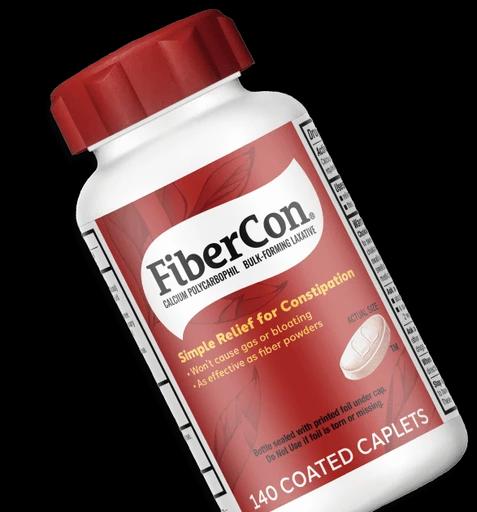
FiberCon
Owned by Prestige Consumer Healthcare Inc.
Calcium polycarbophil bulk-forming laxative brand marketed in caplet form, distributed by Medtech Products Inc., a Prestige Consumer Healthcare company, per 2026 FDA labeling.
fiber-supplementdigestive-healthcalcium-polycarbophil
 Healthcare Pharmaceuticals
Citrucel
Owned by Haleon plc
Methylcellulose fiber supplement marketed as a no-gas alternative to psyllium, owned by Haleon following the 2022 demerger of GSK's consumer health business.
fiber-supplementdigestive-healthmethylcellulose
Competitive Analysis
Market Positioning: MiraLAX competes with 2 brands in the same categories, ranging from mass market to luxury positioning.
Geographic Distribution: Competitors are headquartered across multiple regions, indicating global competition in this market segment.
Brand Heritage: Competitor brands range from established heritage brands to newer market entrants, with founding years spanning several decades.
Advertisement
Independent Alternatives to MiraLAX
Looking for brands with different ownership structures? These similar brands are not owned by Bayer AG, giving you alternative choices that support different corporate structures.
 Healthcare Pharmaceuticals
Konsyl
Owned by Konsyl Pharmaceuticals Inc.
Psyllium fiber supplement brand produced by Konsyl Pharmaceuticals, a privately held Maryland company marketing the same psyllium active ingredient as Metamucil since 1934.
fiber-supplementdigestive-healthpsyllium
Privately Owned
Konsyl is privately owned, unlike MiraLAX which is under a publicly traded parent company.
 Healthcare Pharmaceuticals
Band-Aid
Owned by Kenvue
American adhesive bandage brand invented in 1921, owned by Kenvue Inc. Band-Aid is the leading adhesive bandage brand in the United States and is sold in more than 100 countries.
wound-careadhesive-bandagefirst-aid
Privately Owned
Band-Aid is privately owned, unlike MiraLAX which is under a publicly traded parent company.
 Healthcare Pharmaceuticals
Boots
Owned by Walgreens Boots Alliance
Boots is the UK's leading pharmacy-led health and beauty retailer, founded in 1849, now operating as The Boots Group under Sycamore Partners since August 2025.
pharmacyhealth-beautyuk-retail
Privately Owned
Boots is privately owned, unlike MiraLAX which is under a publicly traded parent company.
 Healthcare Pharmaceuticals
Duane Reade
Owned by Walgreens Boots Alliance
Duane Reade is a New York City drugstore chain owned by Walgreen Co. under Sycamore Partners, operating approximately 90 stores across the five boroughs.
pharmacydrugstorenew-york
Privately Owned
Duane Reade is privately owned, unlike MiraLAX which is under a publicly traded parent company.
 Healthcare Pharmaceuticals
Motrin
Owned by Kenvue
American brand of ibuprofen pain relief medication owned by Kenvue, the consumer health spinoff from Johnson & Johnson, which is being acquired by Kimberly-Clark in a $40 billion deal announced in November 2025.
pain-reliefibuprofenanti-inflammatory
Privately Owned
Motrin is privately owned, unlike MiraLAX which is under a publicly traded parent company.
 Healthcare Pharmaceuticals
Neosporin
Owned by Kenvue
American brand of over-the-counter first aid antibiotic ointment containing bacitracin, neomycin, and polymyxin B. Owned by Kenvue (NYSE: KVUE) since the August 2023 spin-off from Johnson & Johnson.
antibiotic-ointmentwound-caretopical
Privately Owned
Neosporin is privately owned, unlike MiraLAX which is under a publicly traded parent company.
Bayer AG Stock Information
Advertisement
Jobs at Bayer AG
Latest News About MiraLAX
Advertisement
Related Articles About MiraLAX
View more articles
Health
Who Makes Over the Counter Painkillers: Tylenol to Nurofen
Tylenol is Kenvue, days from becoming Kimberly-Clark in a ~$49B deal. Advil is Haleon (GSK spin-off). Aleve is Bayer. Nurofen is Reckitt. Discover who makes your painkillers.
Who Brands StaffNov 1, 2026
TylenolAdvilNurofen

Health
Supplement Brand Ownership: Who Makes Your Vitamins
Garden of Life is Nestle. Centrum is Haleon. One A Day is Bayer. Nature's Bounty is heading to private equity firm Yellow Wood in a $1B deal. Discover who makes your vitamins.
Who Brands StaffNov 2, 2026
VitaminsSupplementsNestle

Geography & Ownership
German Brands That Dominate Global Markets
Volkswagen, BMW, Adidas, Bayer, Henkel, Siemens. German brands consistently dominate multiple global categories. Here is an overview of the companies and brands behind Germany's export-led economic model.
Who Brands StaffApr 8, 2026
German BrandsGermanyVolkswagen
People Also Searched
Discover popular brands and companies in the Healthcare & Pharmaceuticals category and related searches from other users.

Brandpharmaceutical
Abbokinase
Abbokinase (urokinase) is a thrombolytic medication historically used for pulmonary embolism and catheter clearance. Originally marketed by Abbott Laboratories, now owned by Microbix Biosystems as Kinlytic. FDA-approved since 1978.
Brand in Healthcare & Pharmaceuticals
thrombolyticurokinase

Brandmedical-devices
Abbott Medical Devices
Abbott Laboratories' medical device business spanning cardiovascular, diabetes care (FreeStyle Libre), neuromodulation, and structural heart, generating roughly $20 billion annually.
Brand in Healthcare & Pharmaceuticals
cardiovasculardiabetes-care

Brandrsv-vaccine
Abrysvo
Pfizer's respiratory syncytial virus (RSV) vaccine approved for older adults, maternal immunization to protect infants, and younger at-risk adults. Launched 2023.
Brand in Healthcare & Pharmaceuticals
vaccinesmaternal-immunization