Who Owns BP?
BP is the consumer and corporate brand of bp p.l.c., the British oil and gas major listed on the London Stock Exchange under ticker BP with ADRs on the NYSE, headquartered in London. Founded as the Anglo-Persian Oil Company in 1909, it reported $189.3 billion in 2025 sales and employs roughly 62,000 people. Meg O'Neill became CEO in April 2026, succeeding Murray Auchincloss, as the company executes a reset strategy emphasizing upstream oil and gas over renewables.
Who Owns BP?
- Parent Company: bp p.l.c.
- Ownership Type: Brand division
- Company Type: Publicly Traded
- Stock Ticker: LSE / NYSE: BP
| Brand | Parent Company | Ownership Type |
|---|---|---|
| BP | bp p.l.c. | Brand division |
Advertisement
History of BP
- Founded: 1909
- Founders: William Knox D'Arcy
BP began as the Anglo-Persian Oil Company in 1909, founded on William Knox D'Arcy's 1901 concession to explore for oil in Persia, struck at Masjed Soleyman in 1908. It became Anglo-Iranian Oil Company in 1935 and British Petroleum in 1954.
The twentieth century made it an integrated major: nationalized Iranian assets lost in 1951, North Sea and Alaska Prudhoe Bay discoveries in the 1960s and 1970s, and full privatization from UK government ownership by 1987. Under CEO John Browne in the 1990s to 2000s, transformative acquisitions of Amoco (1998), ARCO (2000), and Burmah Castrol (2000) made it one of the world's largest oil companies, and the "Beyond Petroleum" rebranding in 2001 launched the helios logo and its green ambitions.
The 2010 Deepwater Horizon disaster in the Gulf of Mexico, killing 11 and causing the largest marine oil spill in history, defined the company's next decade, ultimately costing more than $65 billion. BP sold billions in assets to cover liabilities.
Under Bernard Looney (2020 to 2023), BP announced the sector's most aggressive net-zero pivot, pledging to cut oil production 40 percent by 2030. Looney resigned in September 2023 over undisclosed workplace relationships. Murray Auchincloss succeeded him and, facing investor pressure, announced a February 2025 strategy reset restoring upstream investment and scaling back low-carbon targets.
Advertisement
Meg O'Neill's April 2026 appointment, the first woman to lead a western oil supermajor, continues the reset: 2026 priorities include upstream growth, the $20 billion divestment program headlined by the Castrol sale, and cost reductions.
About bp p.l.c.
What does bp own?
bp owns global oil and gas production assets, refineries, a trading organization, and a retail network of roughly 21,000 sites. Its brands include bp, ampm, Thorntons, TravelCenters of America, Aral, and Jio-bp. It retained a 35 percent stake in Castrol after selling the controlling 65 percent to Stonepeak in November 2026.
Is bp publicly traded?
Yes. bp trades on the London Stock Exchange under the ticker BP and is a FTSE 100 constituent. American Depositary Receipts trade on the NYSE under the same BP symbol.
Who founded bp?
bp traces to the Anglo-Persian Oil Company, founded in 1909 by William Knox D'Arcy and led in its early years by Charles Greenway. D'Arcy won the Persian oil concession that produced the Middle East's first major oil discovery in 1908.
Advertisement
Where is bp headquartered?
bp is headquartered at 1 St James's Square in London, England, United Kingdom. It employs approximately 100,500 people across roughly 60-plus countries.
Who is bp's CEO?
Meg O'Neill has been bp's chief executive since April 1, 2026. She joined from Woodside Energy, where she was CEO, and is the first external hire and first woman to lead a global oil supermajor. She succeeded Murray Auchincloss, who stepped down in December 2025.
Does bp still own Castrol?
Partially. bp sold a 65 percent controlling stake in Castrol to infrastructure investor Stonepeak in a transaction completed November 2026, retaining a 35 percent minority interest. Castrol brand files on this site are accordingly filed under Stonepeak ownership.
What was bp's revenue in 2025?
bp reported fiscal 2025 revenue of $189.3 billion, essentially flat versus $189.2 billion in 2024. Operating income was $12.6 billion and net income approximately $1.3 billion, reflecting weaker refining margins and oil prices.
Advertisement
- Founded: 1909
- Headquarters: London, England, United Kingdom
- Company Type: Publicly Traded
- Stock: LSE / NYSE: BP
- Revenue: $189.3 billion (FY2025)
- Employees: Approximately 100,500
Where Is BP Made / Based?
- Headquarters: London, England, United Kingdom
- Manufacturing / Operations: United States, United Kingdom, Azerbaijan, Oman, Egypt, Trinidad and Tobago
BP Categories & Tags
BP Sustainability & Ethics
BP remains committed to a net-zero ambition but has materially scaled back its renewables targets since the 2025 reset, divesting or deprioritizing portions of its low-carbon portfolio. Its operational carbon reporting follows standard industry frameworks.
The Deepwater Horizon legacy persists in continuing remediation obligations and permanent reputational weight. Current controversies include activist and investor scrutiny of the strategy pivot away from renewables, which some shareholders welcomed as discipline and climate advocates criticized as retreat.
BP Recalls & Controversies
The 2010 Deepwater Horizon spill remains the defining controversy, with total costs exceeding $65 billion and ongoing environmental monitoring. The company also faces periodic refinery safety scrutiny, past price-manipulation settlements in energy markets, and climate litigation common to the sector, including shareholder resolutions on emissions targets.
The 2023 Looney resignation over undisclosed personal relationships with colleagues was a governance controversy leading to policy tightening. No product recalls apply to its fuel commodities business in the consumer-product sense.
Advertisement
Brands Owned by bp p.l.c.

BP Ownership: Pros & Cons
Advantages
- +Integrated supermajor scale with world-class trading operations
- +First female supermajor CEO brings reset credibility
- +$20 billion divestment program accelerating portfolio cleanup
- +Strong upstream positions in US Gulf, Permian, and Azerbaijan
- +Castrol stake sale monetizes a premium asset while retaining upside
Considerations
- -Decade of strategic whiplash between green pivot and upstream reset
- -Deepwater Horizon liabilities and reputational legacy persist
- -Mid-tier scale among supermajors with historically lower returns than Exxon and Shell
- -Activist scrutiny from both climate and returns-focused investors
- -Leadership churn: third CEO since 2023
Advertisement
Frequently Asked Questions About BP
Sources & Further Reading
Advertisement
Competitors to BP
These competing brands operate in the same categories and provide similar products or services. Compare key attributes to understand market positioning and competitive landscape.
| Brand | Parent Company | Country | Founded | Market Position | Primary Market | Gender Target |
|---|---|---|---|---|---|---|
| Totalenergies | France | 1924 | Mass market | Global | All-ages |
Learn More About Competitors
Competitive Analysis
Market Positioning: BP competes with 1 brands in the same categories, ranging from mass market to luxury positioning.
Geographic Distribution: Competitors are headquartered across multiple regions, indicating global competition in this market segment.
Brand Heritage: Competitor brands range from established heritage brands to newer market entrants, with founding years spanning several decades.
Advertisement
Independent Alternatives to BP
Looking for brands with different ownership structures? These similar brands are not owned by bp p.l.c., giving you alternative choices that support different corporate structures.
 Energy Utilities
TotalEnergies
Owned by TotalEnergies SE
French multi-energy major (EPA: TTE, NYSE: TTE). Oil, gas, LNG, electricity and renewables; $201B 2025 sales; 101,500 employees.
oil-and-gaslngrenewables
Publicly Traded
TotalEnergies operates independently without a large parent corporation.
 Energy Utilities
Challenger Technical Services
Owned by Challenger Technical Services Ltd
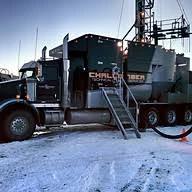
Challenger Technical Services Ltd is a private Alberta oilfield services company founded in 2011, specialising in remedial cementing and well intervention.
oilfield-servicesoil-and-gascementing
Privately Owned
Challenger Technical Services is privately owned, unlike BP which is under a publicly traded parent company.
 Energy Utilities
Chevron
Owned by Chevron Corporation
American fuel retail brand operating more than 7,000 gas stations across the United States, known for gasoline with Techron additive and ExtraMile convenience stores.
gas-stationfuel-retailtechron
Publicly Traded
Chevron operates independently without a large parent corporation.
 Energy Utilities
CMS Energy
Owned by CMS Energy
American energy company providing electricity and natural gas utility services to Michigan residents through Consumers Energy subsidiary.
energy-utilityelectricitynatural-gas
Publicly Traded
CMS Energy operates independently without a large parent corporation.
 Energy Utilities
Phillips 66
Owned by Phillips 66
Phillips 66 is the flagship fuel marketing brand of the downstream energy company of the same name, fronting about 7,620 branded US outlets alongside Conoco and 76.
fuelgasolinepetroleum
Publicly Traded
Phillips 66 operates independently without a large parent corporation.
 Energy Utilities
EOG Resources
Owned by EOG Resources, Inc.
American crude oil and natural gas brand founded in 1999, flagship and sole operating brand of EOG Resources, Inc., producing 1.23 million barrels of oil equivalent per day.
oil-and-gasenergyexploration
Publicly Traded
EOG Resources operates independently without a large parent corporation.
bp p.l.c. Stock Information
Advertisement
Jobs at bp p.l.c.
Latest News About BP
Advertisement
Related Articles About BP
View more articles
Industry Analysis
Brands Divested for Ethical or ESG Reasons
BP sold Archaea Energy. Shell sold its renewables portfolio. Nestle spun off its water business. But are these ESG divestments or greenwashing? Discover brands divested for ethical or ESG reasons. Explore our database.
Who Brands StaffJul 19, 2026
DivestitureEsgEthics

Home And Property
Mobile Network Brand Ownership: MVNOs and Their Parents
Only 3 real networks exist in the US. T-Mobile owns Mint and Metro, Verizon owns Straight Talk and Visible, AT&T owns Cricket. Boost just survived the EchoStar collapse. Every MVNO has a parent. Explore our database.
Who Brands StaffNov 21, 2026
T MobileVerizonAt And T

Home And Property
Internet Provider Brand Ownership: Who Really Runs Your Connection
Charter just passed Comcast as America's largest cable ISP after closing its $34.5B Cox deal (34.3M subscribers). AT&T leads fiber, Verizon absorbed Frontier, T-Mobile is the 5G disruptor. Explore our database.
Who Brands StaffNov 19, 2026
ComcastXfinityAt And T
People Also Searched
Discover popular brands and companies in the Energy & Utilities category and related searches from other users.

Brandcarbon-capture
1PointFive
Carbon capture subsidiary of Occidental Petroleum developing the STRATOS direct air capture facility and sequestration hubs in Texas.
Brand in Energy & Utilities
direct-air-captureccus

Brandfuel
76
76 is a classic American fuel brand owned by Phillips 66, famous for its orange ball logo, fronting branded gas stations primarily in the western United States.
Brand in Energy & Utilities
gasolineclassic-brand

Brandrenewable-energy
Adani Green Energy
Adani Green Energy Limited (AGEL) is India's largest renewable energy company by installed capacity, listed on the National Stock Exchange and BSE. It develops, builds, and operates solar and wind power plants across India.
Brand in Energy & Utilities
solarwind